Monday, 16 January 2012

Gene Clark: No Other

The Byrds, hailed in the beginning as the American Beatles, turned out to be as fractious and egotistical as their UK counterparts were tight, gang-like and grounded. Possibly for this reason, the Byrd deemed to be the heart, the driving force of their rich music, has shifted over the years: initially it was Roger McGuinn, architect of their jet-age jangle, and it stayed this way during the group's lifetime; the spotlight shifted to the smug hippydom of David Crosby in the Seventies afterburn; and then on to Gram Parsons, somehow deemed the most 'authentic' Byrd in the country rock-obsessed Eighties.

Sweet Gene Clark. How sad and typical of his ill luck that he died in 1991, just as the consensus swung his way.

He had been the most handsome Byrd and their finest and most prolific songwriter, but on stage he was sidelined as tambourine player, a proto-Davy Jones. Fear of flying meant he would leave and rejoin the group on several occasions - it also hindered the promotion of any subsequent Clark projects. For decades, ludicrously, he remained a well-kept muso/fanboy secret.

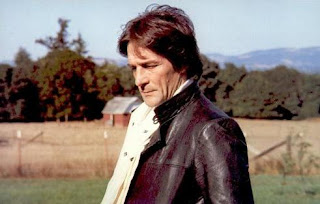
No Other, a dark, baroque album is central to Gene Clark's critical rebirth. The artwork is a giveaway, a collage of Twenties glories with Anita Loos and other sexy flapper chums at its heart. Hollywood Babylon revisited. On the back, rugged Gene appears in mascara and billowing drag. He looks quite terrifying. Drawing parallels between the decadence of the Twenties and the coke-addled extravagance of the mid-Seventies, Clark fashioned a suite of songs that was a pure, personalised Americana, a distillation of all he had seen and learnt from his childhood in Missouri and his adult years in LA. Brian Wilson and Van Dyke Parks had talked of their aborted Smile album being "a Gothic American trip"; likewise, Clark's fellow country rock traveller Gram Parsons once expressed a dream of creating Cosmic American Music. No Other was the real thing.

Aside from his mastery of melancholy, there had been few clues in Gene Clark's back pages that he would deliver something this wild and dark - his last fully realised album had been the beautiful but spartan White Light in 1971. The turning point was meeting the producer Thomas Jefferson Kaye, a Steely Dan acolyte and one-time colleague of the wunderkind producer Curt Boettcher. Their shared love of Zen Buddhism, booze and drugs took them to the Village Recorder studios in west LA in March 1974 with $100,000 from Asylum Records burning a hole in Kaye's pocket.

He had just massively overspent on a Bobby Neuwirth album and now saw No Other as "my Brian Wilson extravaganza". As for Clark, the record was "all about soul searching". Eight songs in six months suggest that there was plenty of that.

Life's Greatest Fool is a misleading opener, being an exercise in fine country rock with only the gospel harmonies and cautionary philosophy there to cause a stir. The gothic undertow of Silver Raven, all "darkened waters" and "troubled sky", veers into Johnny Cash territory. The title track is where things take a wholly different turn, a hypnotic almost funky piece which occupies the same niggling darkness as David Bowie's Golden Years. Apparently it took a week before the musicians got their first take and you can sense the numbness, the intoxication.

Strength of Strings is the album's centrepiece. The brief Clark set himself was to convey the subconscious way in which music is created, how it can be so magical, spiritual, overwhelming. No less. He pulls it off with a slow-burning intro of near-oriental harmonies, almost treading on Crosby, Stills and Nash's toes, while Kaye adds layers of ghostly church voices until the whole thing explodes with Clark's tearful tones - "In my life the piano sings, brings me words that are not the strength of strings." Side 2's opener, From a Silver Phial, is almost light relief, though its lyric - criss-crossing between the tale of a cocaine casualty and a sensual master-servant saga from the old South (or is it Hollywood?) - is as much the opaque heart of No Other's mystique as Strength Of Strings' grandeur.

The eight-minute Some Misunderstanding came to Clark in a dream which he dictated to his wife in the middle of the night. Its vagueness is its beauty, beginning as a meditation on how to take a relationship forward then ruminating on the recent death of Gram Parsons - "We all need a fix, but at times like this, doesn't it feel good to stay alive?" It soars and floats over pedal-steel and organ interplay (the cream of LA session players, anyone you care to name) and hangs eerily in the air, unresolved. Passing through The True One, another country-rock interlude, we reach the climactic Lady of the North, "like silver on the ocean shore". Clark sounds awed, lovestruck, and never sang better, reaching from rumbling baritone to near-falsetto (think of the middle eight of Elvis's Any Day Now and you're close). Dense and hypnotic, his voice weaves in and out of the piano, cello and electric violin - when the shimmering coda arrives it is pure release.

Over the years No Other has been lauded by some but frequently criticised for over-ambition (David Geffen at Asylum concurred and put no promo effort in - it consequently sold zip). This is conservatism on a par with Mike Love's criticism of Pet Sounds. Recorded in a stultifying era of newly-minted and consequently too-cosy singer-songwriters, the result of Gene Clark's search for America's dark heart seems all the more impressive. And it sounds deeper and stronger with each passing year. What a terrible pity he isn't around to receive his standing ovation.

Sunday, 8 January 2012

Happy birthday Elvis

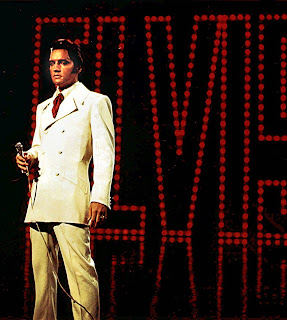
Elvis would have been 77 today. As he only lived to be 42 we were spared that 1986 album, produced by Bob Clearmountain and wrecked by gated reverb; also his ill-advised cover of With Or Without You; and of course his late 90s Rick Rubin album, with Elvis sounding lethargic, barely awake, as he is cattle-prodded through All Apologies. Sadly we also missed his recording of Feels Like I'm In Love (written for him by Mungo Jerry's Ray Dorset, and later a no.1 for Kelly Marie. Sound unlikely? Imagine it in the style of Burning Love).

We are reduced to imagining what might have happened as his real life story has been combed over incessantly for the last 35 years. Elvis has been treasured and traduced in equal measure - the ever-expanding library now stretches from Peter Guralnick's two exhaustive volumes, Last Train to Memphis and Careless Love, to the film Schmelvis: In Search of the King's Jewish Roots and re-prints of his cookbook.

 Finding new material to celebrate rock's all-time golden boy is tough. A few years back the 1968 Comeback Special was given the triple DVD treatment - you want to see (or, at least, hear) Elvis split his pants doing a karate workout? You got it. Along with half a dozen takes of If I Can Dream (mesmerising) and Darlene Love shaking a tambourine for 20 minutes (less so). 


Astonishingly, however, it is still possible to find hidden nuggets in his back catalogue. Elvis's career of mighty peaks and dramatic troughs means a lot of fine recordings have been almost forgotten.

 Here are a bunch of songs which oldies stations tend to skip that capture his voice, humour, plentitude and pathos.

 Some of them you may well now, but if any of them aren't familiar you're in for a treat. Happy birthday Elvis.

Blue Moon (1954)
Recorded for Sun but unreleased for a couple of years, this is one of the eeriest recordings to ever reach the UK Top 10. A muted, clip-clop backing, rather like a Radiophonic Workshop evocation of sepia Americana, is a bed for echo-drenched Elvis to toy with Rodgers and Hart's classic. He sets the sad mood - "Blue moon, you saw me standing alone, without a dream in my heart, without a love of my own" - and then repeats the line, abandoning the happy denouement and replacing it with a ghostly wordless falsetto. Right at the start of his career, he already sounds like a spectre returning to haunt America's pop culture party.

Lonesome Cowboy (1957)
The first of several Elvis recordings with "lonesome" in the title. From the film Loving You, here was a real indicator of how far he was willing to deviate from straight R&R. Who is this channeling? Mario Lanza? Hank Williams? Frankie Laine? Revisiting the ghostly atmosphere of Blue Moon, this oddity was dwarfed by the other songs on the Loving You soundtrack (the title track, Mean Woman Blues, Teddy Bear) but deserves a moment in the high noon sun.

Doin' the Best I Can (1961)
A commercial monster after the so-so success of Elvis is Back!, GI Blues is sometimes seen as the beginning of the end. Yet there are some excellent songs on the soundtrack: Pocketful of Rainbows' unfettered joy, the driving rocker Shoppin' Around, and this Pomus/Shuman ballad of infinite sadness, the cuckolded Elvis singing "You know I was the kind who'd run anytime you called/ I guess I was the only one who didn't mind at all." The Japanese had the good taste to extract it from the score as a 45 - we got Wooden Heart instead.


That's Someone You Never Forget (1962)
A rare co-write for Elvis on this spooked love song that sounds a lot like a eulogy - possibly to his mother. It was included on the Pot Luck album which had artwork that looked like a thrown-together hack-job but included the considerable Suspicion, the wedding-bell weepie Something Blue, and the only song the King wrote on his own, a Begin the Beguine knock-off called You'll Be Gone.


Tender Feeling (1964)
"I'd like to make one good film before I leave. I know this town's laughing at me." - Elvis to co-star Marilyn Mason on the set of The Trouble With Girls

By now the films were getting sillier, more slapdash and more frequent (three in '64 alone), and the music sounded flatter as if there was some essence missing from the recording process - like soul. Most of his soundtrack albums featured one exception to the rule. Tender Feeling (from Kissin' Cousins, with Elvis in a bloody awful blonde wig) is picture postcard pretty, with a lovely celeste motif; singing high, Elvis wrings all he can from this early sixties rock-a-ballad. Part of his greatness was that he always had the ability to make a song seem better than it was.


It Hurts Me (1964)
A lyric dripping with unrequited love, scorn and indignation gave Elvis something to get his teeth into, and he turned in a towering, angry performance that presaged his late-Sixties rebirth. Unsurprisingly, then, he revived It Hurts Me for the 1968 TV special - apart from hardcore fans, most had missed it first time around as the B-side of the daffy title song from Kissin' Cousins.


Animal Instinct (1966) 
Flirtatious flute, a bottomless bass riff, and the session drummer Ken Buttrey's fancy fills make this a potential club hit (Martin Green has been known to give it a whirl). Elvis is a panther in Valentino garb in this highlight from the Harem Scarem score. He often walked out of the Hollywood sessions, disgusted at the material chosen on his behalf (I like Do Not Disturb more than he did, but it's hard to question his commitment given real dreck like Yoga is as Yoga Does or Old Macdonald). With a cheeky number like Animal Instinct, Elvis at least sounded energised - I'd like to think he was even having fun.


Please Don't Stop Loving Me (1966)
The closest he got to a deep soul record, originally on the Frankie and Johnny soundtrack, this has all the hallmarks: funereal pace, subtle Steve Cropper like guitar inflections, the feeling it could burst out of its skin with emotion at any given moment. Like 1962's Suspicion, this is sensuous and paranoiac, and the vocal is a faultless exercise in restraint.

Down in the Alley (1966)
While recording the How Great Thou Art album, Elvis cut loose with this secular screamer, first recorded by the Clovers in the 1950s. Starting with a nutso "changity changity" vocal hook, Down in the Alley features metallic guitar, shrill organ, honking sax and wailing harp. Lascivious is the word. It's loud and rude enough to have been a substantial hit, but RCA sat on it for two years before tacking it on to the Clambake soundtrack.


Tomorrow is a Long Time (1966)
Recorded at the same session, this Dylan cover met a similar sad fate when it could have single-handedly changed the public's perception of mid-Sixties Presley.

 Sparse and lonesome ("I can't remember the sound of my own name"), it features a beautiful fade with the fugitive Elvis humming to himself as he walks off into the sunset. Dylan rated it the best adaptation of any of his songs.


Edge of Reality (1969)
From Live a Little, Love a Little, a film that was also home to A Little Less Conversation, Edge of Reality's claim to fame is that it soundtracked a psychedelic dream sequence, not an everyday happening in Elvis movies. Dark and wordy, black and brooding, the brass bruises the singer as he hears "strange voices echo, laughing with mockery".


I'm Leavin' (1971)
The 1970s were clogged with self-pitying ballads - blame Elvis and Priscilla's separation. This forgotten single, a UK no.23 in a year in which he scored five Top 10 hits, is something else: intense and wholly despairing, Elvis is perfectly balanced with the subtle orchestration as he breaks into the chorus ("tried so hard, so hard, and I just can't take it"), ending it with the title sung in a fragile falsetto.

If I Get Home on Christmas Day (1971)
Elvis's second Christmas album is usually dismissed, apart from lip service paid to the endless blues chugger Merry Christmas Baby. Much more in keeping with the magic of Yuletide is this bittersweet song written by the British hit machine Tony Macaulay (Build Me Up Buttercup, Don't Give Up On Us, Love Grows Where My Rosemary Goes). You can picture Elvis as the Wichita Lineman in deep December, presents in the back his truck as he ploughs home through snow storms. With the feeling he injects into it, and the choir of angels at the climax, you know he'll make it back by dawn.


Good Time Charlie's Got the Blues (1974)
"I'm not a kid at 33" - the retired playboy's admission of his own mortality. This wistful, country piece was as good as it got with late period Elvis, and it would have slotted neatly into Atlantic City, The Last Picture Show or Fat City; visions of a stumbling, lost America, mirrored by the pitiful decline of her greatest living icon. "Play around, you'll lose your wife," sings Elvis - on stage he'd grin and say, "I already did that." After the next line about losing your life, he'd add, "I almost did that already too."

Unchained Melody (1977)
His body was about to give out, and his between song patter on stage was rambling and sometimes embarrassing, but Elvis's voice rarely let him down. If he felt the song, he was as effective as ever. This is a man on the brink, fighting the odds (which include the song's ubiquity) - you will him on, pounding the piano, sweat rolling off him. And he wins. It's astonishing. A few weeks later, he was gone.

Sunday, 1 January 2012

An introduction to Brute Force

If anything symbolised the insanity of the Beatles' Apple set-up, and its dadaist approach to running a business, it was a 1968 single called King of Fuh by the New Jersey-born Brute Force. George Harrison thought Brute had "a lovely voice and a beautiful record", and radio programmers would surely have been bowled over by the London Symphony Orchestra's sumptuous backing, but there was a small problem with the chorus: "All hail the Fuh king."

Born Stephen Friedland in 1940, Brute Force became a member of the Tokens* in the early sixties, soon after they had scored a US #1hit with The Lion Sleeps Tonight. As part of the Tokens' Bright Tunes writing and production team, he used his unexplained nom de plume to write three minute psychodramas that few, Shadow Morton aside, could equal: Del Shannon's She Still Remembers Tony and the Bitter Sweets' What A Lonely Way To Start The Summertime were two of the best, both super-intense, end-of-romance wrist slashers.

And then there's the Chiffons' Nobody Knows What's Going On In My Mind But Me from 1965, an insight into a teenage girl's unhinged but meticulously controlled mind-state. It is at once garbled, triumphant, and - like the Bitter Sweets' single - on the verge of completely losing it. Nobody Knows... is one of the ultimate late-period Girl Group 45s and a rare (though fragile) show of female defiance in the genre. It eventually became a hit of sorts, on the dancefloor at Wigan Casino, via Tammy St John's clattery cover.

The full Force of what was going on in Friedland's mind was eventually revealed in 1966 on an album called Confections of Love. Recorded with Leonard Cohen in attendance, it featured song titles such as To Sit on a Sandwich and Tapeworm of Love. The Chiffons didn't record any of these songs, as far as I know.

Out of the Tokens and sore from the failure of Confections, Force made an attempt to swim the Bering Strait in 1968, from Alaska to Russia, to focus world attention on the closeness of East and West at the height of the Cold War. He made it halfway, to Little Diomede Island. The Inuits took pictures, Life magazine ran a feature - he may have an odd name, they thought, but the kid's all right. Then came King of Fuh.

A Brute Force show could open with him lying on his back, panting like a dog for four minutes - his Extemporaneous album, released in 1969, captured his whacked-out philosophical improv. Still performing, he remains ecologically concerned, politically involved and satisfyingly odd. When Extemporaneous was re-issued by Rev-Ola in 2004 he played a few shows in Britain with Brummie eccentrics Misty's Big Adventure: while he was over he played a one-off show for a horse, the thoroughbred mare Premier Bid (the horse's owners named a foal Special Bru in his honour). If you've seen the documentary The Battle For Brooklyn, you won't be surprised to hear that Brute, now 70, played a show at the re-opened Freddy's Bar, with its original prohibition-era fixtures and fittings re-located from the building that had made way for the barely legal Atlantic Yards development. Brute still picks his battles well.

Director Ben Steinbauer (Winnebago Man) is apparently working on a documentary. Brute's daughter - calling herself, with obvious pride, Daughter Of Force - has been playing shows in Brooklyn.  A little while back her dad's website announced the "same sex marriage of Stephen Friedland to his trademark, Brute Force. Both are male. In lieu of a gift, please send a contribution to your favourite charity."

*The Tokens' own BT Puppy label is, in its own way, as odd as Apple. Some of its releases were in such tiny numbers they are almost impossible to find, including the Tokens' own album Intercourse: if you ever want to hear a harmony pop album with songs of haiku length, humorous-stroke-suicidal lyrics,  and odd animal noises, then look no further.

Thursday, 15 December 2011

Worlds Within Worlds: Basil Kirchin

This is an interview I did with Basil Kirchin in 2002, three years before his death. Please bear this in mind when I refer to dates. Since I wrote it, Jonny Trunk has done a superb job of sorting and issuing the Kirchin archive, much of which had never been given a commercial release, a favourite of mine being Charcoal Sketches. Oh, and I should say that Basil was more obsessed with music than anyone I have ever met.

Basil Kirchin's home may be in Hull, but he spends most of his time in a place most of us are hardly aware of, in "the 834th of a second before thought comes rushing in. In a state of alert inactivity. I spend 90 per cent of my time there so the other reality, keeping a roof over my head, has to make it on the remaining 10 per cent. Which gets pretty difficult at times. The key is, you have to try and act before there's time to think."

Very charming, very intense, Basil Kirchin, 76, has spent the past 40 years sculpting music from "sounds never before heard by human ears, music from another dimension". His reputation rests on a series of works called Worlds Within Worlds, parts of which surfaced on two albums in the early Seventies and which have remained out of print but highly prized ever since. Brian Eno cites them as a primary influence on his ambient music. At the other extreme, he is praised by industrialists such as Coil and Nurse with Wound. He is one of the great innovators in postwar British music, and he remains - very much against his wishes - a well-kept secret.

This should change with Quantum, the first in a series of reissues from Kirchin's startling catalogue. It's jazz, of a sort. Hornbills replace bassists, a bassoon and some geese overlap until you can't tell which is which. There are guitars, amplified insects, saxophones, trams, lions and the voices of autistic children.

It's thrilling, sometimes terrifying, and - though over 30 years old - feels very new.

Kirchin joined his father's big band, aged 13, as a drummer in 1941. "When the war started, I'd come home from school and my old man used to let me play with the band. I was eaten up with it. For two and a half years I slept in Warren Street station and played thirteen and a half sessions every two weeks. One afternoon off - in which I played with the relief band for free. Insane." After the war, Kirchin played with Harry Roy and Ted Heath before taking over the leadership of the Kirchin Band in the mid-Fifties. They acquired famous fans - Sean Connery, Elizabeth Taylor - while Billy Eckstein and Sarah Vaughan would tour Britain only if the Kirchin Band backed them. "I was the loudest drummer in the world. I was known as the Fall of Tobruk."

Uniquely, the Kirchin Band owned a PA system, which enabled Kirchin to record every show. They broke attendance records and starred in Melody Maker polls, but by 1957 skiffle and rock'n'roll were hitting the band's popularity and in any case Kirchin "realised it wasn't enough, because you're a prisoner of rhythm. And I was fed up playing other people's music."

He chucked it all in and escaped to India, where he spent five months in the Ramakrishna Temple on the Ganges. His next stop was Sydney, where disaster struck.

As his luggage was being taken from the ship, something snapped and it all fell into Sydney harbour. All Basil's tapes of the Kirchin Band, basically his whole life, was lost. It still distresses him.

In 1961 Kirchin returned to Britain to work on a "music that was individual". He stayed with his parents in Hull and worked with a local lad called Keith Herd on electronic music. He made some fabulous music for the De Wolfe library, all with odd time signatures, a Kirchin trademark: highlights were the flute and harpsichord suite Abstractions Of The Industrial North (a perfect, self-descriptive library title) and Mind On The Run, which sounds like an alternative Avengers soundtrack. Film work naturally followed; The Shuttered Room, The Abominable Dr Phibes, and an incredibly beautiful, fragile score for I Start Counting, a Jenny Agutter thriller set in freshly built Bracknell new town.

But it was experimentation with tapes and sound manipulation that created Kirchin's big breakthrough. "There is no such thing as a long note," he explains.

"If you take the human voice and slow it down five octaves, immediately everything you can hear drops away. Take birdsong, all those harmonics you can't hear are brought down -sounds that human ears have never heard before. Little boulders of sound. In 1964 it was hard to capture. There was only reel to reel tape, and it took eight or nine years of my life. It was long and hard and painful. Now with the new technology you can hear these boulders of sound without changing the pitch, which is miraculous!"

On and off through the Sixties and Seventies, Kirchin stayed in an autistic community at Schurmatt in Switzerland. "These autistic children, the sounds they make when they try to communicate are unbelievable. They jabber away and of course it's gibberish and meaningless. But if you record it and apply the techniques I've mentioned...trust me, you can hear what they're trying to convey. There's a lot of them in Quantum."

Since the two Worlds Within Worlds albums, Kirchin has written 40 pieces, 12 of which have been recorded but none released. He's now very ill, but is "still working, still roaring, even if it is three months at a time. People of any age should know never to give up. I'm still young, I can't help it if my body's falling apart." This is the first time he's visited London in 15 years, and he seems genuinely delighted that people want to talk to him about his music.

"I'm only good for two things in this world. One is music and the other is this knowledge. It sounds so pretentious, man, my toes are curling, but I have to say it. I want to try and leave something for young people who are starting in music and looking for something as I've been looking all my life. The challenge is, you have to make your life meaningful. Because life is meaningless, the universe is meaningless. It's hilarious really."

Friday, 9 December 2011

"Can you tell me where he's gone?": Dion in 1968

When Dion signed to Columbia Records in 1962, a year after Bob Dylan, he was already a wealthy and very famous singer: The Wanderer, A Teenager In Love, Runaround Sue, and - most angsty of all - (I Was) Born To Cry had made him the teen idol most loved by American girls, most admired by American boys. Columbia must have thought they knew what they were getting, and it wasn't someone who, with a New York accent as heavy as Al Pacino-on-rye, would say things like "the blues is the naked cry of the human heart, like someone waiting to be in union with God."

What happened after his run of hits was four years of heroin addiction, and a total immersion in New York's folk and blues scenes. This was the start of a slow-burning process that led to a Grammy nomination for 2006's Bronx In Blue, an album of Hank Williams, Howlin' Wolf and Jimmy Reed covers. Personally, I think it should have gone to the record that brought Dion back from the teen idol graveyard in 1968 - it was originally called Dion but is usually given the title of the hit single taken from it, the delicate Abraham Martin And John.

"Lemme tell you about that record" he begins, a practised storyteller. "After Martin Luther King was shot, Bobby Kennedy was at his coffin and he said 'Who'll be the next victim of a senseless act of violence?' And three months later he was assassinated. The record came out of a frustration. These guys are reaching for a state of love. People are cutting them down but we're not going to give up. The song was trying to be part of a solution."

The song exploded, a Top 5 hit. It had a soulful humanity that people hadn't heard from Dion Di Mucci before. And it coincided with a relocation - in the old tradition - from New York to Florida.

"I'd just moved here and I'd just sobered up. What could you say? The mid sixties was kind of a lost time for me. Musically I was woodshedding but, y'know, drugs can take their toll and kill your ambition. So I'd come down to Miami to get away from myself. Lo and behold, I came along with me. I got down here, went to a church, got on my knees and said a prayer and I haven't had a drink or drug since. April the first, 1968. And a few weeks later this song came along. To me, it was like it dropped out of heaven."

"The album was done, and all the arrangements, within a week. They were songs I sang around the house. I just went in with my little nylon string guitar. John Abbott from Staten Island did the arrangements. He was a beautiful guy. He always had some french fries. He'd lead the band with a french fried potato."

It includes woodwind-borne, blue sky renditions of Leonard Cohen's Sisters Of Mercy, Dylan's Tomorrow Is A Long Time, and, most intriguingly, Jimi Hendrix's Purple Haze alongside the originals. The album brought Dion in from the cold, and re-united him with Laurie Records, the New York indie that had realised most of his monster hits. The Columbia deal, signed in '62, had started sweetly enough with Ruby Baby, one of his best and biggest 45s. "Then (A&R man) John Hammond played me Robert Johnson's Preachin' Blues that he was putting on a compilation. I realised that this music was probably the undercurrent to everything I did in my life."

After Drip Drop was a Top 10 hit in early '64, Dion began to release singles like Hoochie Coochie Man, Willie Dixon's Spoonful and his own folk-blues The Road I'm On. The latter made it onto the young Marc Bolan's setlist but Dion's teenage fans were more than a little confused: a few months later they'd be lapping up imported versions of the same songs by the Stones, Yardbirds and Pretty Things.

"There was a guy called Buddy Lucas, he played sax for me on The Wanderer, a 300 pound guy. Big guy. He recruited a bunch of guys from the Apollo Theatre. Blues were their roots and they supported me, tried to help me out. I was experimenting." Columbia, who were hoping he'd become a "legitimate" singer like Bobby Darin, were in no mood for experiments. Among the finest, and rarest, of his Columbia 45s is the folk rock stormer Tomorrow Won't Bring The Rain - teeth-clenched, ringing like the bells of Rhymney, it's a match for any Byrds or Dylan 45. Its rarity suggests just what Columbia thought of it.

"I had to leave! They didn't know what I was doing! Tom Wilson, my producer, he encouraged me. And I sat in on a couple of Bob Dylan sessions. But they'd signed a popular rock 'n' roll artist, not a guy who hung out in the Village with Tim Hardin and Richie Havens."

The label let a few singles dribble out, but the full force of Dion's folk-blues revelation could only be felt on Wonder Where I'm Bound, a 1969 album Columbia issued to cash in on the success of Abraham Martin & John; these recordings were firmly in the collectors-only camp until a couple of Sony cds (The Road I'm On and Bronx Blues) were released in the nineties. In 1968, after six years away,  Laurie welcomed the returning prodigal who could do no wrong for them, more than happy to release a whole album. Abraham Martin And John "came from sitting in my little back yard, under a tree, and there was a little canal back there, sitting there with my guitar and a pitcher of lemonade. Am I right? Doesn't it sound like that?"

Yes it does. Looking back, Dion's career - and his forays into folk, blues, soft rock and doo wop - makes a lot more sense than it would have done to Columbia in 1964. There is a love of American music in Dion that he shares with Dylan: few other singers could pull off an album as diverse and delightful as Abraham Martin And John. Maybe the pick of the whole set is a heartfelt version of the Motown-written Loving You Is Sweeter Than Ever.

"That was a Four Tops songs. How did I end up recording it? Probably they were playing it the night before in a saloon or something!

"The way I explain it is I don't sing white and I don't sing black. I sing like Bronx. I don't know exactly what that is, but it's definitely black music filtered through an Italian neighbourhood. It comes out with an attitude."

Tuesday, 6 December 2011

My favourite Beatle

"This is a serious message", it begins. "Peace and love", it says at least once too often. Ringo Starr's weird trashing of his own reputation, first on his website and then all over on Youtube in 2008, made for painful and hilarious viewing. To give him credit, the man has attempted to sign everything he's been sent by fans since 1963; he was almost 70 and wanted to tell the world he couldn't keep up. Of course, it might have helped if he hadn't added that all future fanmail "will be tossed", or delivered this minor news item with the scary line "I'm warning you with peace and love."

Ringo probably wouldn't have been the people's candidate for favourite Beatle before this outburst, not because of any other ill-advised Youtube postings, or for any animosity towards Thomas The Tank Engine, but simply because he was the fourth member of a group that featured three of the most talented singer-songwriters of his generation.

In spite of their oneness, and the inability of anyone outside Britain to tell them apart in 1964, everyone tends to have a favourite Beatle. At various points in their career and afterlife the world seems to have had a collective favourite. In the eighties, after his death, it was undoubtedly John Lennon; when Oasis and the Anthology series brought their music back to the Britpop table in the nineties, John was still regarded as the most innovative, the most significant, the sharpest Beatle.

George was the underdog, the indie Beatle. It might be something to do with the recent folk boom, or the general feeling of achievement by understatement in the most lauded pop (Fleet Foxes, Animal Collective) of the last few years, but a straw poll amongst friends, colleagues and musicians places George at the top of the table in 2011.

Of course, favourite Beatle and best Beatle aren't the same thing. "It's a peculiar testament" says Todd Rundgren, whose links to the group are a public spat in the NME with Lennon in the seventies and played in Ringo's All Starr Band two decades back. "'Favourite' used to just mean the cutest, or the funniest. Now each has his own body of work it's different."

Ringo could probably have claimed the crown when the Beatles first broke in the States, a time when they - and Ringo especially - were regarded as some new breed of being: half human, half haircut. "I did several tours with Ringo and he was terrific to work with" says Rundgren. "Briefly I worked with him pre AA, on a Jerry Lewis Telethon in the late seventies, and he wasn't at all like John Lennon on the rampage, he was... a little more jovial. It was the first time I'd had any dialogue with Ringo and he must have remembered it fondly because he called me up years later. He was always level headed and easy to deal with. It was the other crazies in the All Starr Band I had to look out for! Half the band were in AA and the other half needed to be. But Ringo was terrific. He just enjoys playing music, it's obvious."

Gem Archer's own Beatles obsession began when he was fed tapes by his cousin from the age of 8. "I remember hiding The Beatles At The Hollywood Bowl in the schoolyard. Punk was happening and people thought they were poofs, because they wore ties and stuff. Some kid came to my door and sold me his sister's copy of Imagine for 50p. I was known as the Beatles fan in the village."

Lennon was his favourite, "of course. It was a journey with him. It still is, man. He's still there with all of us. He was perfect - the Rickenbacker, the hair, the boots - but he was imperfect. Completely human. He let his hair down on all of us."

The odd thing about John Lennon, the most anti-establishment Beatle, is that he is now the one with an airport named after him, the one who wrote the cosy, fathomless, unofficial world anthem Imagine, the one who created proto-Live Aid 'event pop' with All You Need Is Love, and thus, in 2011, the most revered by the establishment. Gem Archer's wife "is a teacher, and they teach him now: Recent History, year 5. It's because he grew up in the war, and then he preached peace. And of course there's no danger of him spoiling it by shooting some granny now."

In the days before every Beatles-related event meant blanket media coverage, a small film like The Birth Of The Beatles could sneak out on the BBC almost unnoticed. Forgotten by many, it can now only be found on pirated dvds. The kid with the quiff playing Hamburg-era George was John Altman, who would define small screen infamy a few years later when he first appeared in Albert Square as Nick Cotton. His favourite "was always George. He was a Pisces, like me, and I thought I looked a bit like him. Similar ears. I think that's one of the reasons I got the part in Birth Of The Beatles. This kid used to flick my ears from behind in the playground, you know what kids are like. My mum said don't worry, Clark Gable had ears like that and he was a pin-up. So that made me feel better. I wonder if George got stick for it at school."

Altman's first taste of the Beatles "was Please Please Me, on the radio in the wintertime. I'd never heard that sound before. It was a bit like the first time I heard Hendrix, exciting and vibrant. The next stage in my Beatles habit was getting Please Please Me, the album, for Christmas. I left it on the Dansette record player, and it warped. I remember desperately trying to iron it flat on an ironing board with a damp towel on top. A sad end."

As he grew up with the band Altman would "listen out for George's contributions, the songs on Rubber Soul and Revolver, like Taxman. They were quite special. And they built up to All Things Must Pass - every musician has an apex and I think that was his."

They never met. "Pete Best was the technical advisor on Birth Of The Beatles, and he was the only Beatle I met. The only quote I heard from any of them about the film was that Ringo found it quite amusing." Altman still sounds slightly disappointed by this.

George's allure could also be down to his vagueness, which allows fans to fill in the blanks any way they wish. John and Paul are open books, foibles exposed, but if George had a dating profile it would be of the one photo, one-liner variety, mystique unquestionably enhanced. He was the only Beatle without an obvious role. "Paul was the cute one" recalls Todd Rundgren, "John was the smart one; each had a bailiwick they were in charge of. Ringo was the cuddly one. The short, homely, cuddly one. Girls liked Ringo, at least girls who thought Paul was out of reach, too cute by half."

Rundgren's favourite is also George. "For me, his contribution was to elevate guitar to a special status. I'm unaware of anyone using the expression 'lead guitar' before The Beatles, and that was a position highlighted by George Harrison. It drew guitar players into taking their playing more seriously. Solos on records could've been anything - a saxophone, an ocarina - but on Beatles records I'd always look forward to how that little interlude would be filled by lead guitar. In the case of George Harrison it was concise, accessible, a bit clever. It was also short and accessible enough for most guitarists to work out, even without George's finesse."

In the early eighties, while he was still Orange Juice's singer, Edwyn Collins had his My Top Ten list printed in Record Mirror. Alongside entries by Al Green and George McCrae was The Beatles' She Said She Said - Edwyn wrote that he particularly liked "George's astringent guitar". I was a huge Orange Juice fan - I remember having to look up "astringent".

When Edwyn Collins met his partner Grace Maxwell he told her his "favourite guitarists were John Fogerty and George Harrison. When people say they don't like The Beatles, they may as well say they don't like fresh air. 'I hate fresh air!' It's ridiculous."

After Collins had a stroke in 2005, lying in a hospital bed, he didn't want to hear any music. Three years before, he had written a song called The Beatles, which managed to lyrically condense their career inside four minutes. "After nine or ten weeks Grace brought in an old tape I'd made, a compilation. The first track, I remember, was Promised Land by Johnnie Allen, and the second had me in tears."
"Tears?" laughs Grace, "You were in floods! You were bawling."
The song was Photograph, sung by Ringo Starr, and written by George Harrison.

Mojo has featured some combination of Beatles on their cover more than a dozen times in just under 200 issues. Editor Phil Alexander reckons there are still plenty of untold, or at least unexplored, stories to make them newsworthy. He has noted George's ascent to the summit. "You can see why people say George now - he was the coolest. Not acerbic like Lennon, not thumbs aloft, and he wasn't playing the Ringo good guy role. He was mystical and cool. He's the fashionable choice. Stupid as it might sound, I think the unsung hero of The Beatles today is Paul."

If favourite Beatle and best Beatle are not the same thing, it could be true that Paul McCartney - the most successful songwriter in British pop history - is undervalued. "It's just deeply unfashionable to say Paul is your favourite" says Alexander. "It sounds callous to wonder how people would feel if he died tomorrow because it might just happen, and I don't mean to use death as a barometer, but it's true - I think they'd say he was the best Beatle. After John Lennon died, Paul said that his exterior had been a front, and I sometimes wonder how he views his own exterior. The way he often says 'we were a pretty good little group', that kind of false modesty, can be irritating, but if he believed everything people said about him he'd go mental. To have survived what he survived, you have to respect him."

As a teenager, Anneliese Midgley worked in Liverpool's Beatles Shop on Mathew Street. "People would ring up and say 'Can I speak to The Beatles?' We got a bundle of letters for them every day. Not everyone was a loony, some were just asking for mugs, or fridge magnets, or where Paul lived, but quite a few would say 'I LOVE YOU' in scrawly capital letters. Paul got the most, definitely. George? No. He was really the outsider, not like today. He was not as fashionable."

In her nineties stint at the shop, Anneliese met all three surviving Beatles - Paul left the greatest impression on her. "I was 14 and I'd got a Saturday job there. It was just before he did the Liverpool Oratorio. He was rehearsing at the Philharmonic one week, and me and my best friend waited outside. His crew were really nice - they could tell we were just kids, not crazy fans. We went most days, and Paul would come out and say hello. It must have been easter, 'cos one day he brought us all creme eggs."

Up in Glasgow, Grace Maxwell had to use her imagination for a Beatle fix. "You know the metal poles that hold up clothes lines? There were four in our back garden. We'd make each one a Beatle. You'd run over, snog the clothes pole, and say which Beatle it was. Mine was Paul. Does that sound weird?"

"Paul is the best Beatle" reckons Anneliese. "It's obvious. Take Double Fantasy and McCartney II, made in the same year (1980). I heard Front Parlour (from McCartney II) in a club in Shoreditch a few years ago, and everybody was asking what it was, everyone thought it was some German electronic group. Paul was thinking of the future, how the eighties would be. On Double Fantasy, John was going back to his roots, again. Boring, really. Paul still makes a real effort, and maybe that's just not fashionable."

Phil Alexander is inclined to agree. "John's crusading mentailty made him a cult figure, compounded by his passing. He was the bravest - the records he made with Yoko are still controversial, so ahead of their time, but Paul still wants to do new things even to this day. The last Fireman record was really musical and brave, despite the bizarre, politician aura around him."

Todd Rundgren, possibly keen to start another spat with a Beatle in the British press, feels a little differently. "George peaked around the Bangladesh concert. Ringo did Photograph, that was a good song. John's career was healthy because of album oriented radio, he wasn't played so much on AM. But Paul was getting regular Top 40 attention, even if it was a crappy piece of junk like Silly Love Songs. He's so erratic. He pulled it off with Band On The Run. But the stuff with Michael Jackson - Say Say Say and The Girl Is Mine? Dreck! It's weird. He's too willing to do anything. When he thinks he's not on AM radio enough he makes an attempt to do it and it comes out embarrassing, back to his baby talk again. He doesn't realise how much things have changed."

A compilation of tracks from the last five McCartney studio albums would, I reckon, be enough to cement his legend. They contain songs that are at least equal to any of his post-Beatles output, and good enough for the thumbs aloft, 'good little band' persona to be forgotten: The End Of The End is quite possibly the saddest, and most elegant song written by any sexagenarian pop star.

The Beatles' reach goes beyond just their music. "If anybody was going to make the sixties explode it was John Lennon" says Gem Archer. "It wasn't David Crosby. It certainly wasn't Elvis. And Dylan didn't put himself up for it, did he?"

And Ringo? His comments about Liverpool on the Jonathan Ross show have to be seen as tongue in cheek, his fanmail comment the outburst of a grouchy 69-year old having a bad day. Anneliese Midgley, who has only had to field a fraction of the questions from Beatles nuts that overworked Ringo has, nails the conundrum.

"My favourite Beatle is The Beatles. They're like four quarters that make up a circle. They're inseparable."

Monday, 5 December 2011

At the movies with Patrick Hamilton

In The Midnight Bell, his first great novel, Patrick Hamilton paints a picture of the pub at one minute to five: "a faint bustle of preparation in the other bars, but deep silence in the saloon. The governor had now reached the door. He slid back the upper bolt... a sharp click, a grunt of achievement, and The Midnight Bell was open." The similarity to the hush of anticipation before a theatre curtain goes up is intentional - to Hamilton, the pub (most likely The Prince Of Wales' Feathers on Warren Street, Fitzrovia) was his theatre. Same characters but a different performance every night, and he rarely missed a show.

Peter Ackroyd has called Patrick Hamilton one of London's great voices. Born into a reasonably wealthy Sussex family in 1904, he fell disastrously in love at 23 with a West End prostitute called Lily. While moping after her he spent much time in saloon bars, lounge bars, public bars, hanging out with small-time crooks, broken bar staff, fascist sympathisers, and other misfits and losers. According to his brother Bruce, it played havoc with his complexion and hairline, but gave him an ear for a turn of phrase and a talent for finding gold in the everyday. It also catapulted him from minor writer into the role of critics' choice when The Midnight Bell was published in 1929.

Yet neither The Midnight Bell nor 1941's grimly terrifying Hangover Square are what Hamilton is best remembered for. In 1929 he also wrote a play called Rope; ten years later he wrote another called Gaslight. Both were enormously successful, running for years around the world, and both were turned into Hollywood films. Separating art and commerce, he considered Rope "a thriller, nothing but a thriller" but his plays made him a fortune at a time when writing stage melodramas was still, in the early days of cinema, a viable career. Even so, he thought of them as popular entertainments, and almost entirely unrelated to his novels.

Compared to The Midnight Bell, Rope was a strange, stilted thing. It concerned two students of Nietzsche who attempt the 'perfect' murder purely for kicks, and was based around a gimmick: centre stage throughout the play was a trunk containing the victim's body. The story seemed to be based on the case of Leopold and Loeb, two rich, smart American kids who kidnapped and killed 14-year old Bobby Franks. Brandon, the more manipulative killer, is one of the thoroughly heartless types who crop up in most of Hamilton's work - whether it is Netta, the bitchy actress in Hangover Square, or Ralph Ernest Gorse, the clinical anti-hero of a post-war trilogy.

Alfred Hitchcock's 1948 film of Rope is best remembered for being shot in a sequence of eight minute takes. It also played up the Leopold and Loeb link, inferring the killers were gay (Loeb was killed in prison after making advances to another inmate) which was enough to see the film banned in Chicago, Seattle and Memphis. The tension of the script, though, is dissipated by both Hitchcock's experimentation - you can't for a second forget that the takes are v-e-r-y long - and Farley Granger's continuous darting around the screen like a sweaty chicken. His performance couldn't be further from Hamilton's cold, clipped script. The author was unimpressed, describing the film as "sordid and practically meaningless balls."

Gaslight was a different story. By 1938 Hamilton was a confirmed Marxist, and the grisly greed of the evil Gregory, quite happy to spend years driving his wife to madness in order to gain some jewels, reflected his belief that capitalism - accelerated by the rise of the Nazis - was coming to an end. The British film from 1940, directed by Thorold Dickinson is desperately claustrophobic with Gregory (Anton Walbrook) marked out as Bella's (Diana Wynyard) persecutor from the off. Everywhere there is melancholy and menace. "A dirty evening for a stroll, sir" remarks a policeman. "There are a lot of dirty things in London" replies Gregory.

George Cukor's 1944 slow-burning remake finds a lambent Ingrid Bergman cast as Bella, rather than the ageing spinster Hamilton envisaged. Charles Boyer, away from his usual matinee idol roles, is well cast as a more insidious Gregory than Walbrook's. Still, amidst the gloss there is plenty of room for Hamilton's casual English banter; on a train journey, a woman offers Bella a digestive biscuit - "unpleasant name, isn't it? I always call them diggy biscuits!" When the maid Nancy (a slatternly Angela Lansbury in her debut film) first appears, Gregory asks "I hope you're not a flighty girl."
"I don't think so, sir" she replies, with a sly air that Hamilton must have been quite familiar with.

The only novel that made it to the big screen was Fox's 1945 take on Hangover Square. Suffice to say that in place of the novel's alcohol-drenched pre-war paranoia is a period drama about a bunch of fancy Edwardians who live in Hangover Square, Fulham. It really is that crass. A fine, forgotten actor called Laird Cregar (also in This Gun For Hire with Veronica Lake) loved the book and persuaded Fox to make the film only to see it bowdlerised beyond recognition - as George Henry Bone, the principal character, he was probably more embarrassed by the results than even Patrick Hamilton and died of heart failure, aged just 28, before the film was released. All Hangover Square has to recommend it beyond Cregar's browbeaten performance is the quite beautiful Linda Darnell (Rex Harrison's wife in Preston Surges' Unfaithfully Yours) as Netta, and an early Bernard Herrmann score that anticipates his Hitchcock work.


The BBC chose Hamilton's best early work for their 2005 adaptation, Twenty Thousand Streets Under The Sky, a trilogy in which Hamilton captured the whole rootless population of London by focusing on just a few characters, and one setting - The Midnight Bell. Bob and Ella work behind the bar. He is young and handsome, but drinks heavily, and fatally falls for a prostitute called Jenny who slowly tears his life to shreds; Ella, secretly in love with Bob, watches helplessly.

Oddly, it is filmed in an impure monochrome, like a colourised film that has been left in a damp cellar: once you get used to it, the relentless greys, greens and browns of thirtiess Fitzrovia look all the glummer for it. This is just about the only liberty taken - the screenplay adheres to Hamilton's dialogue without missing a beat. Which puts a lot of pressure on the performances. Zoe Tapper's Jenny is as dizzyingly pretty, blonde and coquettish as she is blank, a combination intriguing enough to ensnare Bob beyond all reason. When he proudly points out that Dickens used to live on the same street as her, Jenny giggles "Dickens! Silly old bugger, ain't he?"

Ella is clearly warm-hearted but, rejected by Bob, can find no outlet for her genorosity. The doe-eyed Sally Hawkins, fresh from Fingersmith, has a permanently melancholy expression that betrays Ella's endless disappointments. Still, her stoicism can't prepare her for the leech-like attentions of Mr Ernest Eccles (Phil Davis): his family are "army" he keeps reminding her; he's a "good catch" everyone else chips in. You can smell his rotten teeth, his stale port and stilton breath. He is horrid. The only real flat note is Bryan Dick's Bob: streetwise and smirking, flat cap fixed at a rakish angle, he seems far too savvy to fall for gauche Jenny's looks alone. Hamilton's creation was surely more bookish. While Jenny's daft comment on Dickens  should ruin the learned Bob's whole evening, here he just rolls his eyes as if it to say "Women, eh?"  We never really understand his intentions - why he doesn't just slip her a tenner and get it over with.

It's hard to fault the settings (recognisably Fitzrovia) or the score (think Pennies From Heaven), though, and the attention to detail in a BBC period drama is something to be treasured after catastrophes like their make-over jobs on Casanova and Beau Brummel. The final episode - with Ella fending off the grisly, grasping Eccles - is particularly claustrophobic, engrained with sooty black humour. No small feat: this is the first time anyone can claim to have captured the real fug and fog of Hamilton's novels.

Hamilton naively believed that the end of the war would lead to a bright new Britain and he became quite disillusioned, seeking solace in the sauce more than ever. "Even Marx was the victim of the same pathetic illusion" he wrote to his brother. "He could see the bloody struggle ahead. What he failed to see was that the bloody struggle was so horribly distant." The contentious character that grew from Hamilton's increasing misanthropy was Ernest Ralph Gorse, a thoroughly believable monster who gently, ruthlessly destroyed everybody around him before moving on, from Brighton to Henley to some other town full of willing victims. There is no love and precious few sympathetic characters in the Gorse trilogy (loosely adapted in the eighties by ITV as The Charmer) which was poorly received at the time. Today Gorse's inscrutable evil feels blackly convincing. He is a man cut from the same cloth as fifties petty crims turned killers like George Smith, John "Acid Bath" Haigh and Neville Heath. Far too nihilistic to be filmed, he may be Hamilton's strongest, if most elusive, creation.

In the end, Patrick Hamilton's true life's work was unfilmable. While his plays invariably ended with truth and justice emerging victorious, the hours he spent in gin palaces, chasing hopeless romances and wasting small fortunes, were worked into deeply atmospheric novels of great humanity and obliterating darkness. With little hope of redemption to be found in the bottom of a bottle, Hollywood turned away.
 
Site Meter